The first Monday of September has a very specific moment. You sit in your usual chair, open your email, and within half an hour your shoulders are exactly where they were in July. As if the three weeks of vacation never happened.
Does this sound familiar? Don't worry: it's not that the holidays were useless. It's just that your body arrives in September carrying a different burden than it did in June, and it's a good idea to understand what it's made of before sitting on it for another nine months.
Why does your back hurt after the holidays?
September marks the return to routine, and with it comes the back tension that often follows the holidays. Many people seek help. Personalized massage assistance in Granada for a tense, stiff, or back with accumulated discomfort. And it's no coincidence.
Although summer is associated with rest, the reality is that it often involves changes in our posture and movement habits. Changing beds, carrying suitcases, sitting for hours in a car or plane, walking in unstable sandals, or spending more time in less ergonomic positions are common practices that can impact our muscles.
Furthermore, the heat promotes dehydration, and many people reduce or abandon their regular physical activity. This combination can create a favorable environment for feelings of discomfort or accumulated tension, especially in the back, neck, and lower back.
Summer and bad posture: the origin of many tensions
During the summer, we leave behind the structures that support our routine. We sleep in unfamiliar beds, use pillows that don't suit our cervical needs, and expose ourselves to long journeys in uncomfortable positions.
It is also common to alternate between days of high physical activity and days of total inactivity, generating a muscular imbalance that the body can manifest through discomfort or a feeling of accumulated tension.
Signs of accumulated stress to pay attention to
- Difficulty moving smoothly in the morningThat stiffness upon waking may indicate that the muscles are not relaxing properly.
- Feeling of "heaviness" in the shoulders or upper backThis persistent tiredness may indicate a buildup of tension in key areas.
- A feeling of pressure in the head that appears after several hours in front of the computer.It may be related to tension in the cervical area.
- Discomfort when turning, bending down, or raising your armsEveryday movements that feel restricted are a sign that the muscles are asking for attention.
You don't have to wait until you're in intense pain to ask for help. The sooner you address the tension, the easier it is to support the recovery of balance.
What is a deep tissue massage?
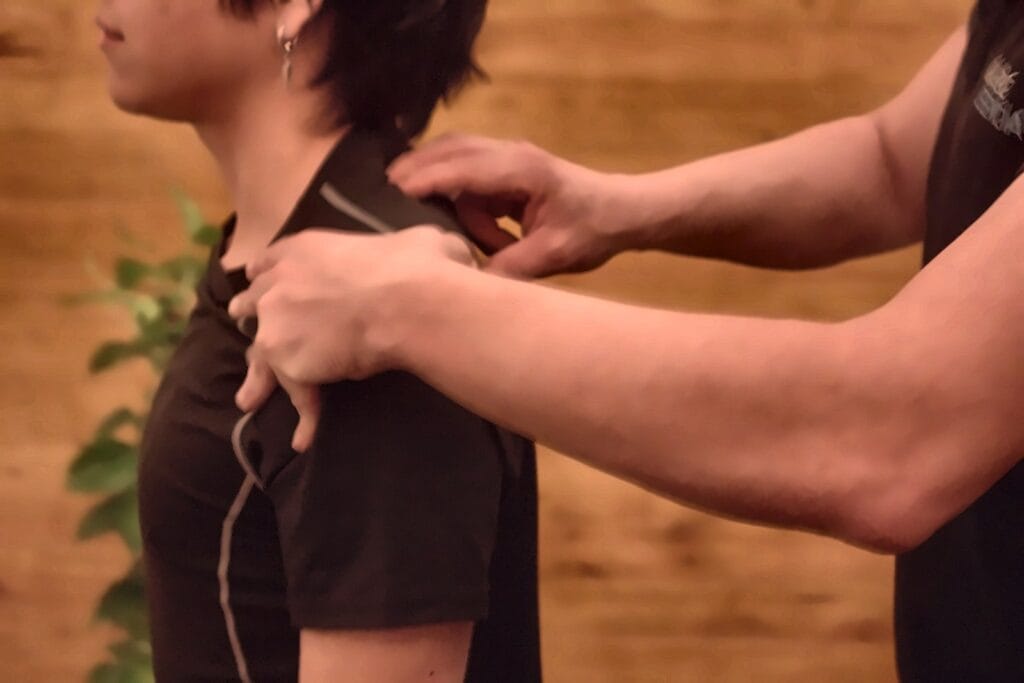
The relaxing massage It is a manual technique focused on facilitating the release of deep muscle tension and promoting a sense of mobility. Unlike aesthetic or relaxation massage, it focuses on areas where the muscles are most overloaded.
In September, after a period of physical imbalances, this type of massage can be a very valuable tool. Many people describe a feeling of greater lightness and well-being after the sessions, both physically and emotionally.
How does a deep tissue massage work?
The deep tissue massage works on the areas of greatest tension with precision, using techniques such as:
- Slow, deep pressures to accompany the release of tension points.
- Kneading with drag, which mobilizes the fascia and helps to restore the elasticity of the connective tissue.
- Gentle passive stretching, which can restore a feeling of length and relief to the muscle chains.
Deep tissue massage vs. relaxation massage: which one to choose?
- The relaxing massage It works on a superficial level, generating a general feeling of calm. It is especially recommended for people with stress or emotional exhaustion without deep muscle tension.
- The relaxing massage It goes further: it seeks to accompany the release of areas of accumulated tension, work on rigid tissues and promote the feeling of mobility.
What a deep tissue massage can offer
- Greater feeling of relief from accumulated muscle tension.
- Reduced feeling of physical fatigue and greater overall well-being.
- Contribution to a more restful night's sleep.
- Greater sense of mobility and elasticity.
- Greater body awareness and better posture in everyday life.
Areas that get most overloaded during holidays
Cervical muscles and trapezius muscles: Tension from poor sleep, spending hours looking at your phone, or traveling in uncomfortable positions. The result is stiffness, a feeling of pressure, and a heavy neck.
Dorsal area: It accumulates postural tension, especially between the shoulder blades, in people who have carried weight or spent many hours sitting without lumbar support.
Lumbar: This area is particularly sensitive to sedentary behavior combined with occasional intense movements. It can manifest as discomfort when getting up or standing.
Is a deep tissue massage uncomfortable?
A deep tissue massage can be intense at times, especially when working on a particularly tense area. But it should never create an unbearable sensation. If a certain threshold is exceeded, the muscle will react, and the effect will be the opposite of what is desired. Each session is a conversation between the body and the massage therapist's hands.
Habits to enhance the effects of massage
- Drink plenty of water, especially in the hours following the session.
- Avoid strenuous activity on the same day as the massage.
- Stretch at least once a day, prioritizing your neck, back, and hips.
- Incorporate mindful breathing or active breaks if you work sitting down for long periods.
In Quiroesencia We believe that the balance between body and mind is cultivated daily. Our massage, yoga, and manual wellness center is located in the heart of Granada, just a five-minute walk from the Cathedral. You can Book your relaxing massage session in Granada on-line.
Disclaimer
The content presented in this article does not constitute medical or health advice. The services offered by Quiroesencia fall exclusively within the scope of physical well-being and relaxation (paramedical). We do not perform assessments or sessions for injuries or illnesses. For any medical condition, please consult your doctor or physiotherapist.