
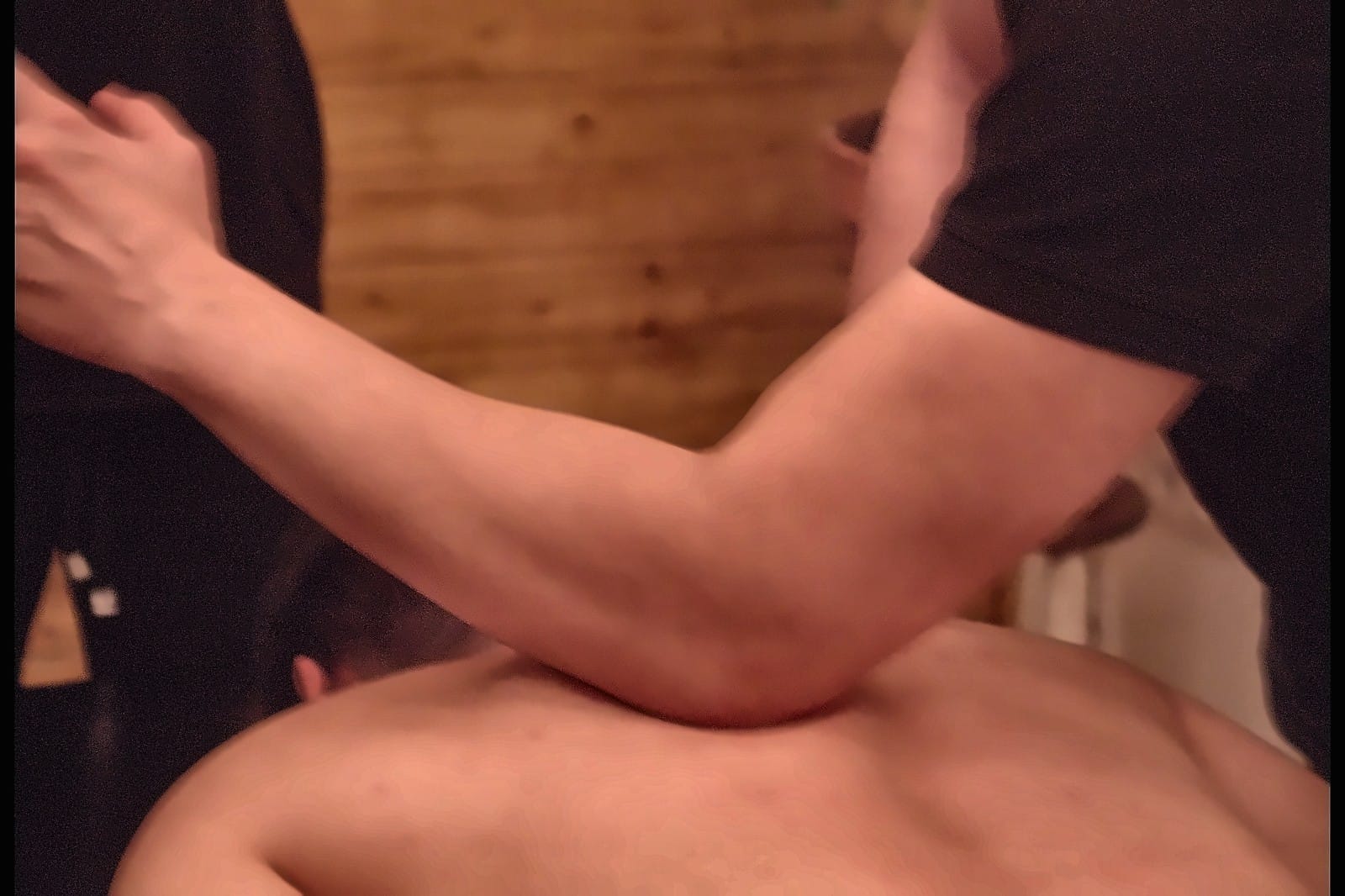
Decontracting massage in Granada
When tension builds up in one area and just won't let go
The Decontracting massage in Granada Quiroesencia focuses on the areas where the body accumulates the most tension—back, neck, shoulders, and lower back—using firm and progressive techniques. It's not about strength, but about intention: working on those "charged" points to help the muscles release what they've been holding onto for a long time.
Each session begins with a brief conversation to understand where you feel the most tension and how you're feeling that day. The pressure and pace are adjusted to your comfort level at all times. The idea is simple: that you leave feeling lighter and more relaxed.
What you will feel in the session
Tension that is released
Firm and progressive work on the strained areas helps the muscle release the stiffness it had accumulated.
Lighter body
A pleasant feeling of lightness and mobility in the treated areas, which lasts after leaving the center.
Tailored to you
The pressure, the pace, and the work areas are decided with you. There are no fixed protocols: each session is based on how you arrive that day.
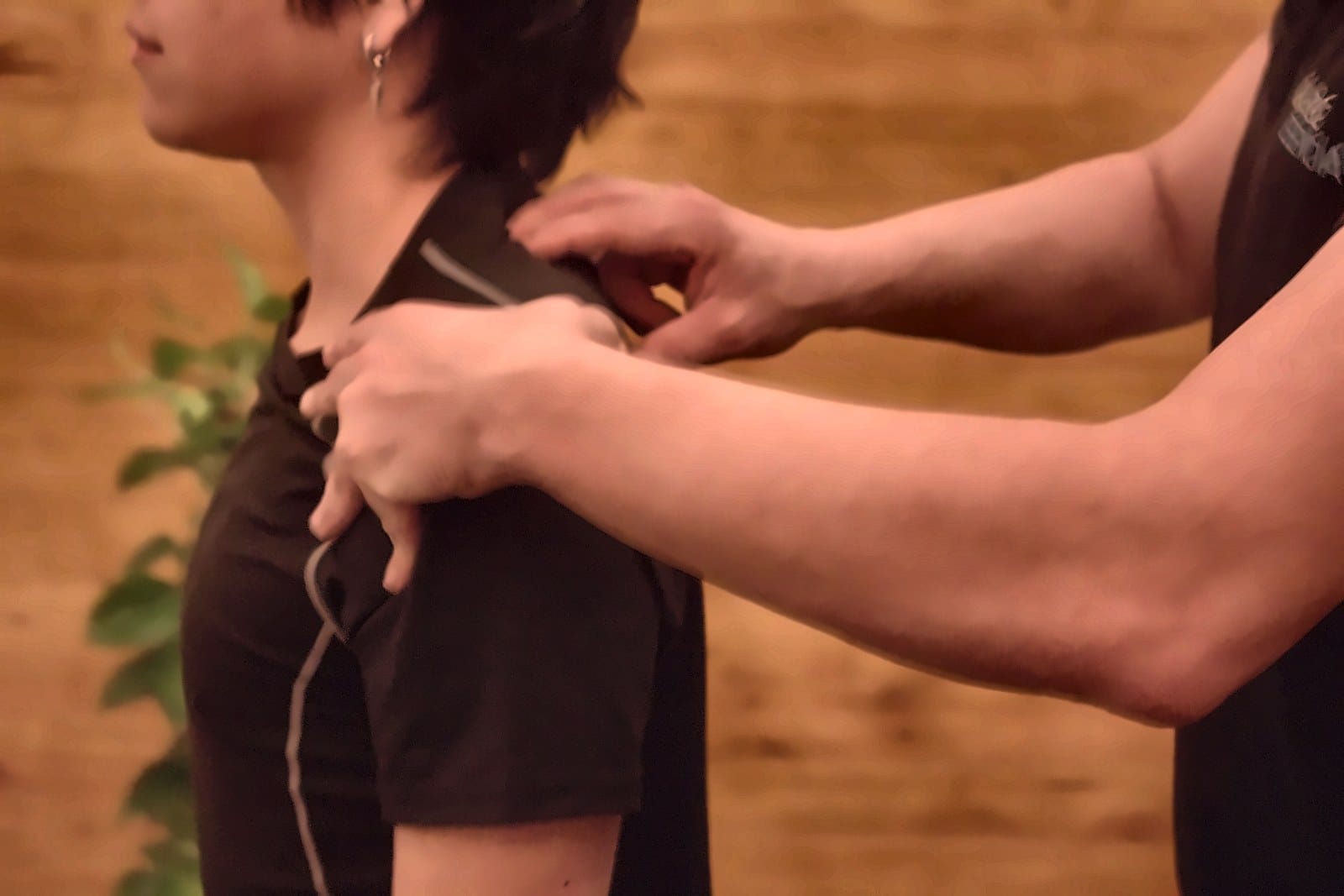
How we perform deep tissue massage
We combine kneading, sustained pressure, and friction on the muscles of the most stressed areas. The rhythm is progressive, so the body can yield without resistance.
The session can focus on a specific area—back, neck, cervical spine, lower back—or be distributed according to what you agree upon with your massage practitioner at the beginning. No special preparation is necessary.
There may be moments of increased pressure at the most stressful points. If at any point it exceeds your comfort level, please let us know: communication during the session is part of the process.
Areas where tension accumulates the most
- Neck and cervical spine: discover how relieve neck tension and what to do in the face of a muscle contracture in the neck.
- Back: We'll explain how it feels and how to manage back muscle tension.
- Lumbar region: Very common in sedentary jobs. Learn about our approach to lower back tension.
- Head and shoulders: more about the massage for head and neck tension.
How your session will be, step by step
Many people go to a deep tissue massage session expecting to clench their teeth for an hour. It doesn't work that way, and knowing beforehand how it will go completely changes the experience.
1. We locate the area before touching you
We start sitting down, with some specific questions: where exactly do you feel it, since when, what movement triggers it, is it one area or several, and are there any places you'd prefer we not touch? Those three minutes of conversation are what guide the session to where it needs to go.
2. We'll leave you alone to change.
We leave the room and you close the door. You stay in your underwear and lie down under the towel; during the entire session, only the area we're working on is exposed. We won't enter without knocking first and waiting for you to tell us you're ready. A helpful tip: if you're wearing a bra, it's best to use one with clips. The deep tissue massage focuses a lot on the back and neck, and at some point, you'll need to turn over—this way, it unhooks in a second, and you don't have to worry about it.
3. We never go straight to the point
This is what surprises first-timers the most. The first ten or fifteen minutes are spent working broadly and superficially to warm up the tissue. A tense muscle that suddenly receives deep pressure will resist and contract further. You reach the point when the area is ready, not before.
4. The moment of pressure: we're talking numbers
When we reach the charged zone, we'll ask you about the intensity on a scale of 1 to 10. The place where we want to be is a 6 or a 7That discomfort you recognize as "that's it," intense but bearable, where your body relaxes instead of tensing up. A 9 doesn't work better: it works worse, because you tense up to defend yourself. If we go above that point, say so and we'll go back down.
5. The closure and the following two days
We'll give you a few minutes' notice before we finish, leave you alone again, and you can get up slowly. We're telling you this in advance so it doesn't catch you by surprise. In the following 24 or 48 hours it is common to notice the area is somewhat sensitive, similar to mild muscle soreness. It's a normal response to intense exercise and will pass on its own. Drink water, move around normally, and avoid strenuous activity on the first day.
Enduring doesn't help. Really.
There's no reward for enduring more pressure than you're comfortable with, and the result is worse. Saying what you need to say when you need to say it is what allows us to do our jobs well. You're not bothering us, you're not interrupting, and you're not going to offend us. Phrases you can use without thinking twice:
- «"That's an 8, lower it a bit."»
- «"Yes, stay a little longer."»
- «"Leave that area alone, it's very sensitive for me."»
- «"I need to breathe for a moment."»
- «"I'm cold." / "I'd rather we didn't talk much."»
And if you prefer not to speak during the session, let us know at the beginning and we'll only ask you what's necessary. It's as valid an option as any other.
First time trying a firming massage? We'll tell you about it. how a session feels from beginning to end and how far the pressure goes.
Duration and prices
50 minutes
60 €
110 minutes
140 €
Prices are valid Monday to Friday. On Saturdays and public holidays, this session is subject to a fee. WhatsApp, Depending on team availability that day. Do you come regularly? Check out our available vouchers at the price list.
When to choose a deep tissue massage
Within our menu of massages in Granada, the firm pressure massage is ideal when tension is concentrated in specific areas and you're looking for firm, focused work: a stiff neck, a tense back after hours at a desk, or a lower back that just won't let go. If your tension is mainly in your neck, these can help. Self-massage techniques for neck tension between sessions.
If what you want is general calm and to release the stress of the day, the relaxing massage It's more immersive and has a continuous rhythm. If you're looking for even deeper work on sustained tension, or if you train and need a release, the sports and deep tissue massage It combines slow, sustained pressure with specific work on the muscles.
If you're unsure which one suits you best, write to us at WhatsApp and we'll guide you before you book.
Frequently Asked Questions
Does a deep tissue massage hurt?
It's a firm massage, but it shouldn't be painful. The massage practitioner adjusts the pressure to your comfort level at all times, finding that pleasant point of intensity where the tension begins to release. If at any point it feels too much, please let us know.
How is it different from a relaxing massage?
A deep tissue massage targets specific areas of tension with firmer, more intense techniques. A relaxation massage aims for overall calm with gentle pressure and a steady rhythm. Both promote well-being, but the after-effects are different.
How many sessions do I need?
A single session provides a noticeable sense of relief. For areas with persistent tension, many people opt for a series of spaced-out sessions. We'll decide this together based on how you're feeling.
Can I come if I have an injury or medical condition?
The deep tissue massage at Quiroesencia is a wellness practice, not a medical treatment. If you have an injury, a medical condition, or are pregnant, it's best to consult a qualified healthcare professional first. Let us know when you book, and we'll tailor the session to what's safe and comfortable for you.
How do I book?
The most convenient way is from our online booking pageYou choose the duration, day, and time. If you're unsure whether this session or a sports massage would be better for you, contact us via WhatsApp at +34 621 217 595 and we'll discuss it before you book.
Where is the center?
Located at 48 San Jerónimo Street, in the heart of Granada's historic center. We are just a few minutes' walk from the Cathedral and well connected to the city center and Albayzín.
Your relaxing massage session in Granada is waiting for you.
Book in one minute from our online catalog or write to us by WhatsApp and we answer any questions before the session.
The deep tissue massage at Quiroesencia is a wellness practice, not a medical treatment. If you have a medical condition, please consult a qualified healthcare professional.