
Deep Tissue Massage in Granada
Some tensions only subside with more intention, not more force.
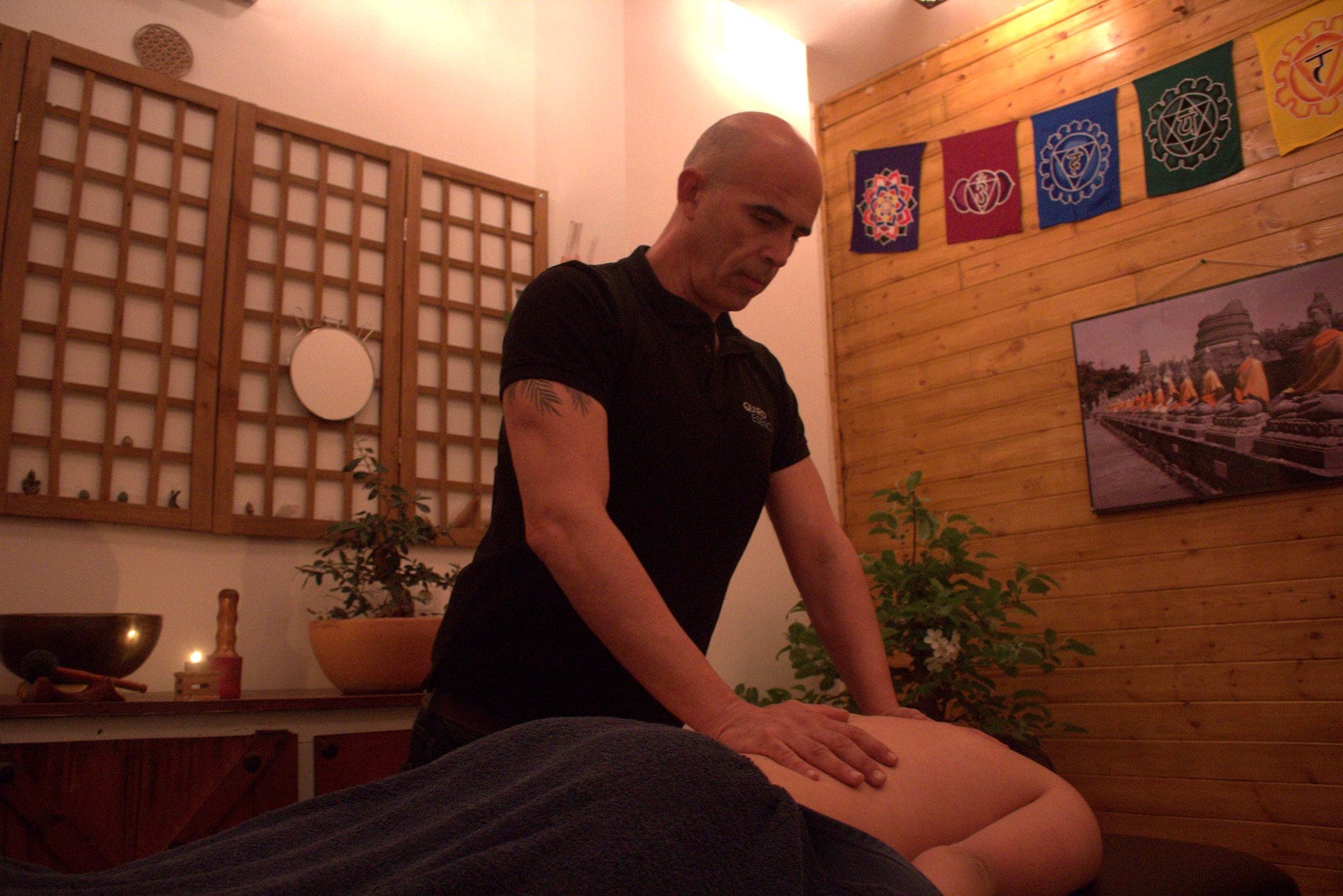
He deep tissue massage in Granada Quiroesencia works on the deepest muscle layers using slow, sustained pressure. It's not a force massage; it's an intentional one. The goal is to guide the body in releasing tension that has accumulated over time, without forcing it. This is the session known in English as... deep tissue massage, in case you arrive looking for it under that name.
Each session begins with a brief conversation to understand which areas are most tense and how you're feeling that day. The pressure and pace are adapted to what your body needs at that moment, not to a fixed protocol. The idea is simple: that you leave feeling that something has truly loosened up.
What you will feel in the session
Pressure that releases
Not the pressure that hurts. The slow, inward pressure that restores the muscle's ability to release what it has been accumulating.
Lighter body
The feeling of lightness in the treated areas and a state of calm that lasts for hours after leaving the center.
Tailored to you
The pressure, the pace, and the work areas are decided with you. There are no fixed protocols: each session is based on how you arrive that day.
How we work with deep tissue
We use deep pressure techniques on muscle and connective tissue: slow gliding movements, sustained compression, and targeted work on areas of greater stress. The pace is slow so that the body can yield without resistance.
The session can focus on a specific area—back, shoulders, neck, legs—or be distributed throughout the entire body, depending on what you agreed upon with your massage therapist at the beginning. No special preparation is necessary.
There may be moments of intense pressure in areas with a lot of accumulated tension. If at any point it exceeds your comfort level, please let us know. Communication during the session is part of the process.
Mobility and postural well-being
Beyond simply releasing muscle tension, many people come seeking to feel light and loose again in their daily lives: to regain that feeling of moving comfortably after hours in front of the computer or maintaining the same posture for too long.
During the session, in addition to pressure work, we incorporate gentle movements and assisted stretches that guide the body towards a greater sense of spaciousness and balance. We're not trying to correct anything; we want you to leave feeling more open and calm.
If you come regularly, we also share small self-care habits that you can apply at home or at work to maintain that feeling of lightness between sessions.
How your session will be, step by step
This is the massage that generates the most questions before booking. This is exactly what will happen from the moment you walk through the door.
1. We decided together on the session map
We begin seated, with some specific questions: which areas feel most tense, since when, what gesture or posture triggers them, and if there are any areas you'd prefer we not to touch. Here we also decide on the scope: In 50 minutes you can work one or two areas well; 110 minutes allows you to cover the whole body without rushing. Choosing the wrong duration is the most common mistake, and it is avoided in this conversation.
2. We'll leave you alone to change.
We leave the room and you close the door. You remove your clothing as much as you feel comfortable—many people leave their underwear on, and that's perfectly normal—and lie down under the towel. Throughout the session, only the area we're working on remains uncovered. The rest of your body stays covered.
3. First, the fabric is tempered.
This is where this massage differs from the idea many people have. The first ten or fifteen minutes are broad, superficial gliding strokes. Deep tissue isn't forced open; it opens when it's warm and the body is no longer on guard. Going straight to the deep layer is what makes a massage aggressive and ineffective.
4. The deep layer: breathe, don't hold it in
When we go deeper, the pressure is slow and sustained: we stay in one spot for several seconds waiting for it to ease. We ask you about the intensity on a scale of 1 to 10, and the place where we want to be is a 6 or a 7. And one indication that completely changes the experience: When you feel it tightening, slowly release the air instead of holding your breath. The tissue gives way when you exhale. If you hold your breath, you contract, and the work becomes uncomfortable without being more effective.
5. The closure and the following two days
We'll give you a few minutes' notice before we finish, leave you alone again, and you can get up slowly. We're telling you this in advance so it doesn't catch you by surprise. In the following 24 or 48 hours it is common to notice the treated areas are somewhat sensitive, similar to mild muscle soreness. This is a normal response to strenuous activity and will resolve on its own. Drink water, walk normally, and leave the intense exertion for the next day.
Breathe. And say it.
There's no reward for enduring more pressure than you're comfortable with, and the result is worse. Telling us what you need when you need it is what allows us to do our job well. You're not bothering us, you're not interrupting, and you won't offend us. Phrases you can use without hesitation:
- «"That's an 8, lower it a bit."»
- «"Yes, stay a little longer."»
- «"Wait, let me breathe."»
- «"Leave that area alone, it's very sensitive for me."»
- «"I'm cold." / "I'd rather we didn't talk much."»
And if you prefer not to speak during the session, let us know at the beginning and we'll only ask you what's necessary. It's as valid an option as any other.
Is this your first time? We'll tell you. what exactly happens in a first session, including the questions that almost no one asks out loud.
Duration and prices
50 minutes
60 €
110 minutes
140 €
Do you come regularly? Check out our 4-session 50-minute package for €200 (Monday to Friday).
When to choose deep tissue massage
Deep tissue massage is the option on our menu of massages in Granada This is especially helpful when you've been dealing with an area that doesn't respond to gentler techniques. Consider persistent neck or lower back tension, tight trapezius muscles from long hours at a desk, or legs that feel heavy at the end of the day. If your tension is concentrated mainly in your neck, you might find these exercises useful. Self-massage techniques to relieve neck pain between sessions.
If you're looking for general calm and to release the stress of the day, perhaps the following would be a better fit for you: relaxing massage, where the work is more immersive and the pace more continuous. For athletes seeking support before or after exertion, the sports massage It combines depth with specific work on the musculature.
If you're unsure which option suits you best, contact us via WhatsApp and we'll guide you before you book.
Frequently Asked Questions
Does deep tissue massage hurt?
There may be moments of intense pressure, especially in areas with a lot of accumulated tension. It shouldn't be painful: if at any point the pressure exceeds your comfort level, please let us know so we can adjust it. Communication during the session is part of the process.
How is it different from a relaxing massage?
Relaxing massage uses gentle pressure and a steady rhythm to induce a general state of calm. Deep tissue massage targets specific areas with greater pressure and a slower pace. Both promote well-being, but the experience and subsequent sensation are different.
How many sessions do I need?
A single session already creates a noticeable feeling of change. If you're looking for something more lasting in areas of chronic tension, many people opt for a series of 3 to 4 sessions. We'll decide together based on how you're feeling.
Can I come if I have an injury or medical condition?
Deep tissue massage at Quiroesencia is a wellness practice, not a medical treatment. If you have an injury, a medical condition, or are pregnant, it's best to consult a qualified healthcare professional first. When you let us know when booking, we'll tailor the session to what's safe and comfortable for you.
How do I book?
The most convenient way is from our online booking pageYou choose the duration, day, and time. You can also contact us via WhatsApp at +34 621 217 595 if you prefer to confirm availability beforehand.
Where is the center?
Located at 48 San Jerónimo Street, in the heart of Granada's historic center. We are just a few minutes' walk from the Cathedral and well connected to the city center and Albayzín.
Your deep tissue session in Granada is waiting for you.
Book in one minute from our online catalog or write to us via WhatsApp and we will answer any questions before the session.
Deep tissue massage at Quiroesencia is a wellness practice, not a medical treatment. If you have a medical condition, please consult a qualified healthcare professional.