Thai massage and the energetic tradition: working with the "sen"«
Thai Massage: More than Stretching
When people think of Thai massage, the first thing that usually comes to mind is intense stretching, almost like a kind of "passive yoga." And yes, the bodywork is deep and active, but reducing it to just that is a huge oversimplification. Thai massage, as we have learned it in Spain As in Asia, especially during my training years in Korea, it's a very comprehensive traditional discipline that combines physical work, breathing, and body awareness. It's a practice of well-being in motion.
Thai massage has a history spanning over 2,500 years, its roots intertwined with traditional Thai culture, Buddhism, and influences from Ayurvedic and Chinese traditions. Its legendary creator is Jivaka Kumar Bhaccha, Buddha's personal physician, who is credited with possessing knowledge of energy channels and body manipulation techniques.
Unlike other types of massage that work directly on the muscles, Thai massage is based on a traditional idea: well-being is cultivated when vital energy—the "lom" for the Thais—flows freely through channels called sen. The masseur, then, not only seeks to relax or stretch, but according to this tradition, to accompany the energetic balance that connects the whole body.
The link between body, mind and energy
Something that fascinates me about Thai massage is that, in its tradition, it doesn't separate the physical from the emotional or energetic. Everything is connected. Throughout my professional career, I've worked with many people who came in with a feeling of tension in their back, for example, and we ended up working on an area related to stress, sadness, or accumulated anxiety.
I have observed how, when releasing a point of tension in a line sen, It's not just a muscle group that relaxes; it also changes breathing, improves mood, and sometimes releases pent-up emotions. That's what makes Thai massage more than just a manual technique: it's a way of listening to the body from within.
What are "sen"?
The sen In Thai tradition, these are lines or energy channels through which vital energy flows, known as lom. This energy, according to this tradition, is what keeps all the body's systems in balance: physical, emotional, and mental. If a sen According to this view, it is blocked, the energy does not circulate correctly, and this can manifest as tension, fatigue, restlessness, or general discomfort.
Definition and comparison with the meridians of the Chinese tradition
The sen They are similar to the meridians of Chinese tradition, but they are not exactly the same. While meridians are perfectly defined and located with millimeter precision, the sen They are considered more general paths, pathways along which energy flows, without such strict delimitation. In Thai tradition, ten main lines are recognized, called Sen Sib, although there is talk of hundreds of smaller channels.
For example, the Sen Sumana It runs through the center of the body and, in tradition, is associated with the balance of the digestive system and breathing. When I work with someone who describes feeling anxious or having very shallow breathing, I usually apply pressure and balancing techniques along this line, and I often notice how, little by little, their chest expands better and their breathing becomes deeper.
How they relate to physical and emotional well-being
Thai massage stimulates the sen, According to their tradition, this is done through pressure applied with the fingers, palms, elbows, or even feet, along with stretches that "open" the body. It is a very direct way of working on a physical level and, within their cultural framework, of harmonizing internal sensations.
Therefore, understanding the sen It's not just a theoretical matter. It's about learning to read the body like a map, where every line tells a story, and every pressure can help relieve a long-standing feeling of tension.
The role of the "sen" in Thai massage
The sen They are not merely an abstract energetic concept, but rather guide the entire structure of Thai massage. They are like the rails on which the manual work moves. From the first touch, the massage therapist explores with their hands (and sometimes with their feet or knees) to detect where the body feels most relaxed and where there is a sensation of tension. And this is noticeable in the body: localized tension, a feeling of cold in certain areas, less elastic skin, or small contractions that do not respond to a conventional massage.
Specific techniques for working on the senses
Work the sen It involves a combination of techniques that go beyond simple muscle kneading. The most common are:
- Rhythmic pressure with thumbs, palms or elbows on the power lines.
- Assisted stretching, which open the joints and provide a feeling of looseness.
- Rocking movements that provide bodily calm and a feeling of relaxation.
- Sustained compressions on specific points of the sen, which can help relieve the feeling of tension.
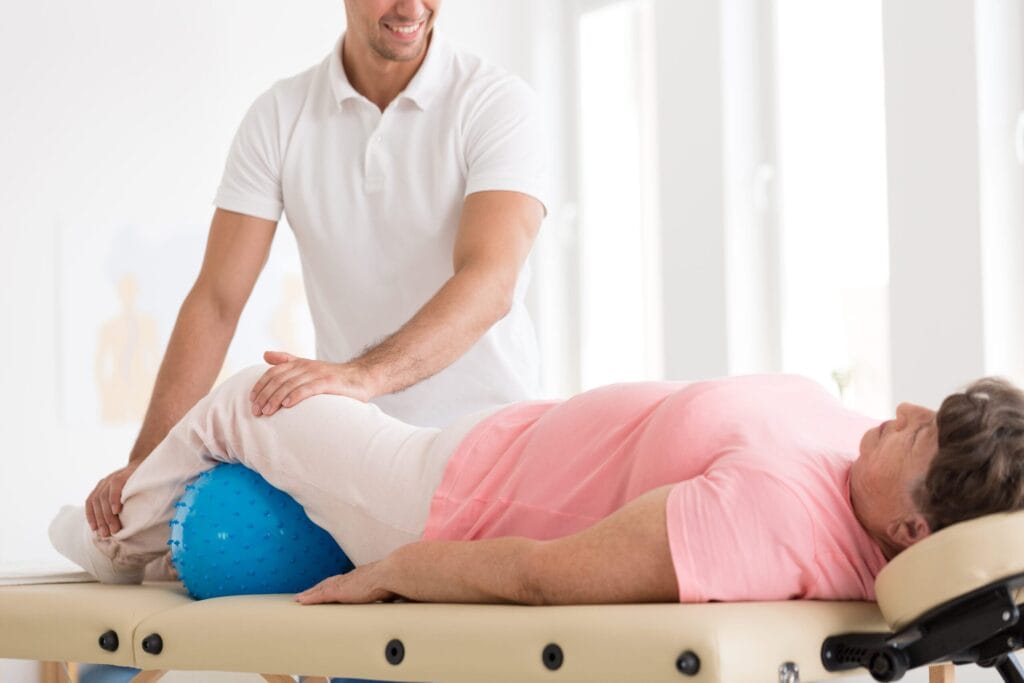
For example, when a person arrives with a feeling of lower back stiffness or sciatic discomfort (always with prior professional healthcare assessment when necessary), I usually work on the Sen Kalathari, This line runs along the outer part of the legs to the hips. With a sequence of deep pressure and hip-opening stretches, many people describe a feeling of greater freedom in the area, as if something has relaxed. This is a common response when we work on this line.
Sensations associated with a feeling of "stuck energy"«
In the Thai massage tradition, a feeling of energy blockage can manifest in many different ways. Unlike a clear muscle contraction, which usually has a direct cause (physical exertion, poor posture, injury, etc.), diffuse sensations are most often associated with these "blockages" according to this tradition, and they tend to be persistent. It's as if something isn't flowing properly inside.
Feeling tired, tension without apparent cause, poor sleep, etc.
Some of the most common sensations that people describe in a session include:
- Persistent feeling of tiredness, Even after getting a good night's sleep, the person feels like they "lack spark," as if their energy is draining away for no reason.
- Muscle tension that cannot be explained by physical exertion, especially in the neck, shoulders, jaw or abdomen.
- Unrefreshing sleep, with a feeling of "active mind" or internal restlessness.
- Feeling of slow digestion or a knot in the stomach, without apparent medical cause (always with medical assessment if it persists).
- Emotional changes: irritability, sudden sadness or feeling of emotional blockage for no clear reason.
- Localized cold or lack of sensation in certain areas of the body, especially the feet, hands or lower back.
These sensations often appear in people who eat healthily, exercise regularly, and even receive massages regularly… but still feel that something isn't quite right. In these cases, the Thai massage tradition works from the perspective of energy flow. If the sensations are persistent or intense, it's always advisable to consult a qualified healthcare professional.
How it is observed through palpation and body reading
Over the years I've learned to read the body in a more subtle way. It's not just about touching muscles, but about feeling the texture of the skin, the temperature, the density of the tissue, and above all, observing how the body reacts to touch. When, in the Thai tradition, a sen is blocked, there are usually areas that:
- They react with disproportionate sensitivity under light pressure.
- They have a harder or flabbier muscle tone than usual, as if there were no fluid neuromuscular connection.
- They appear insensitive or overly sensitive, which in this tradition is interpreted as an alteration in the energy flow.
- They don't "breathe"«This is how I explain it to the people I work with. If an area doesn't move, doesn't respond to the general breathing rhythm, it means something is stagnant in terms of muscle tone.
I also observe a lot of the posture and body language. People who constantly cross their arms, tense their necks, or walk hunched over often reflect accumulated tension. In these cases, the work involves not only targeting the muscles but also gently supporting the area with pressure, movement, and breathing.
Sensations that come from working with the senses
When, in Thai tradition, a sen Blood flow returns to normal, and the body notices it immediately. We're not just talking about relieving a specific tension, but about a general feeling of greater ease. Many people describe feeling improved circulation, greater physical calm, and a sense of emotional release after the session.
Feeling of warmth, increased mobility and mood
One of the effects that people often describe after a session is a increased sensation of body warmth. Cold or tense areas return to their normal temperature. These are some of the most frequently described sensations after a session:
- Greater sense of joint mobility, especially in areas that seemed "stuck" such as hips, neck or shoulders.
- A feeling of relief in areas of persistent tension.
- Deep relaxation, which often leads to a very noticeable state of calm during the session (something very common in Thai massage).
- Feeling of improved mood, "lightness" or mental clarity after the session.
- Deeper, more restful sleep in many cases after the session.
Differences between traditional Thai massage and the Western approach
With globalization, Thai massage has traveled the world… but in doing so, it has undergone some adaptations, especially when introduced into spas or wellness centers where aesthetics or relaxation take precedence. And while that's not necessarily a bad thing, sometimes the traditional and cultural essence of its original form is lost.
Modern adaptations without losing the traditional essence
In Thailand, Thai massage is performed on the floor, on a futon, while wearing comfortable clothing, without oils, and can last between 60 and 120 minutes. Traditionally, the goal is to work the sen (energy channels), mobilize the joints, and harmonize the flow of energy. In contrast, many Western centers offer it as a "stretching massage" or a kind of assisted yoga, where the physical technique is prioritized but the breathing and rhythmic aspects are neglected.
I've seen very "adapted" versions where key elements are lost, such as pressure on traditional energy points, the slow rhythm, or the deep work on internal areas like the abdomen or diaphragm, fundamental in the tradition of working with the senThat's why, in my practice, I always try to maintain that connection with the root: every movement has a purpose, every contact seeks to listen to the body.
My experience combining Thai with manual techniques and Korean massage
During my training in Korea and Spain, I learned to integrate Eastern techniques with Western manual labor principles. This has allowed me read the body from multiple perspectives and adapt the Thai massage to each person without losing its traditional base.
For example, in people with a significant feeling of structural stiffness, I use gentle manual techniques to support a joint before working on the sen that passes through that area. Or vice versa: sometimes I start working on a sen so that the area relaxes and allows for smoother work. It's a two-pronged approach: energetic tradition and bodywork working together.
I also use Korean massage techniques, such as chuna, which incorporates more dynamic movements and rhythmic joint mobilizations. This helps me, for example, with people who describe a very active nervous system and need to release not only physical tension, but also that "internal hyperactivity" that is so exhausting.
The beauty of this combination is that I can personalize each session according to what the body needs at that moment, without sacrificing technical precision or traditional depth. And I assure you that when these two perspectives—Eastern and Western—are aligned, the sessions are much more complete.
Balance as a path to well-being
Thai massage and its energetic traditions remind us of something fundamental: the body is not just a collection of muscles, bones, and organs. It is also breath and emotional experience. And when any of these elements feels blocked, the entire body feels it. Hence the importance of working from a holistic approach, one that doesn't limit itself to simply relieving specific sensations, but rather seeks to address the underlying issues. accompany a feeling of inner balance.
Listen to your body and take care of your vital energy
Throughout my professional career, I've seen how people who lived with persistent tension or accumulated fatigue transformed their experience by reconnecting with their bodies and their breath. But that requires more than just good technique: it requires listen to the bodyAnd that's something we can all learn.
Your body is constantly communicating with you: with a sigh, with stiffness upon waking, with a feeling of tension that appears only when you're stressed… Thai massage helps you understand this language and release what's accumulated so that everything can flow again. But you don't have to wait for a session to start taking care of your body. sen.
Recommendations for caring for your senna at home
Here are some simple practices I recommend to people who come to my sessions to maintain a wellness routine between visits:
- Breathe deeply every day, at least for a few minutes. Mindful breathing is a highly valued practice in many wellness traditions.
- Do gentle stretches, like yoga or conscious mobility. You don't need to be flexible, just consistent.
- Massage your own feet and abdomen with their hands or a ball. These are key areas through which, traditionally, many people pass. sen.
- Avoid accumulating emotions without expressing them. Talking, writing, or even crying when you need to is also part of emotional care.
- Take care of your rest and diet. Well-being is cultivated in the everyday, not in the extraordinary.
- Listen to your body. If you're experiencing tension that won't go away, don't ignore it: observe it, move around, breathe… and if you need help, make an appointment. At Quiroesencia, we can advise you on the type of sessions that best suit you.
In Quiroesencia We believe that the balance between body and mind is cultivated daily. Discover how Thai massage and its energetic traditions care for your body. An ancient technique that combines stretching and pressure. Our massage and yoga center is located in the heart of Granada, just a five-minute walk from the Cathedral.
If you're looking for a space to take care of yourself, relax, and reconnect, we'd love to welcome you.
Note: Thai massage is an ancient, hands-on wellness technique, not a medical practice. The concepts of "sen," "lom," and "vital energy" are part of traditional Thai culture. If you have a medical condition, consult your qualified healthcare professional before beginning any session.