What is diaphragmatic breathing and why is it so valuable?
Breathing is such an automatic act that we rarely stop to observe how we do it. However, since I discovered diaphragmatic breathing, I understood that this seemingly simple gesture contains an immensely powerful tool for emotional regulation. Diaphragmatic breathing, also known as abdominal or deep breathing, is a technique that involves actively using the diaphragm—a dome-shaped muscle located between the chest and abdomen— to achieve more efficient and relaxing breathing.
Unlike shallow breathing, which primarily involves the chest and shoulders, diaphragmatic breathing allows the abdomen to expand upon inhalation, facilitating a deeper intake of air. This breathing technique can be accompanied by a sense of calm that many people notice almost immediately. When we breathe this way, we not only improve the body's oxygenation but also send it a signal: "Everything is alright, you can relax.".
In my experience as a yoga practitioner and meditation guide, I've witnessed how this technique can guide anxiety toward greater peace. What fascinates me is its accessibility: you need nothing more than your body and your attention. With just a few minutes of practice a day, many people describe changes in their perception of stress and a greater sense of presence. Conscious, deep breathing isn't just a technique; it's a practice of presence.
Diaphragmatic Breathing vs. Thoracic Breathing: Understanding the Difference
When I first became interested in how we breathe, I was surprised to discover that many people primarily breathe through their chest: they use their chest muscles to move air, resulting in rapid, short, and shallow breaths. This type of breathing, common in stressful situations, can keep the nervous system in a state of alert.
In contrast, diaphragmatic breathing involves the abdomen. When performed correctly, you feel a gentle expansion of the belly upon inhaling, while the chest barely moves. This type of breathing can promote greater oxygenation and, most importantly, can encourage the nervous system toward a state of greater calm and presence.
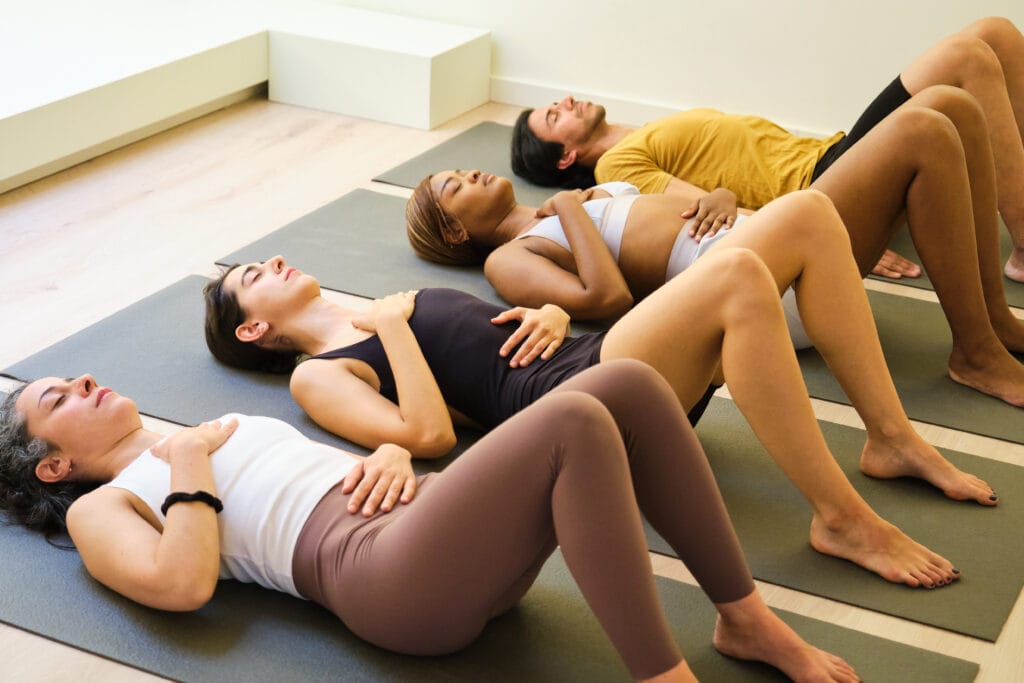
A simple way to check your breathing is to lie down and place one hand on your chest and the other on your abdomen. If your chest moves more than your abdomen when you inhale, you're breathing thoracically. If your abdomen rises gently, you're using your diaphragm. This awareness is the first step toward change.
Why it works: the honest explanation
You'll find texts that explain this in great physiological detail. We prefer to stick to what can be observed, which is quite a lot and doesn't need embellishment.
Breathing is the only automatic bodily function that you can also control at will. You can't change your heart rate by thinking about it, nor your digestion. But you can change your breathing. And since the body breathes differently depending on its state—short and rapid when it's on alert, long and shallow when it's calm—intentionally changing the pattern acts as a kind of feedback signal.
In other words: you don't breathe slowly because you're calm, but rather breathing slowly signals to your body that it can be calm. That's the whole mechanism, and it's enough.
The detail that almost everyone does backwards
When someone who is tense hears "take a deep breath," they usually take a deep breath and exhale sharply. And they end up more agitated than before.
What matters is not the entrance, it's the exit. A long, unhurried exhalation does more for calm than ten deep breaths in a row. If you take away only one idea from this entire article, let it be that.
What's most fascinating is that this process requires nothing more than intention and practice. In moments of high stress, sitting down, closing your eyes, and taking three minutes to breathe slowly and deeply can make all the difference. It's like inviting your system back to its natural state of equilibrium.
What people describe when practicing abdominal breathing
As you practice diaphragmatic breathing, many people begin to notice effects not only on the body, but also on the mind and emotions.
On the physical plane, The most frequently described effects include:
- Greater feeling of oxygenation and lightness
- A feeling of greater calm and less tension perceived in the body
- Greater awareness of breathing pattern
- Feeling of greater digestive comfort
- Less perceived tension in neck and shoulders
On a mental level, Diaphragmatic breathing acts as an anchor. When the mind is agitated, bringing attention to the abdomen and the flow of air helps to bring us back to the present. It stabilizes us.
Emotionally, By calming the body, we create space so that emotions don't overwhelm us. I've seen how people who describe habitual states of anxiety begin to manage their emotions better simply by practicing conscious breathing.
Step-by-step guide to start practicing diaphragmatic breathing
Starting to practice this breathing technique is simple, but it requires attention and patience, especially if you come from years of shallow breathing.
- Find a quiet place. Sit or lie down with your back straight.
- Place one hand on your chest and another on your abdomen. This will help you feel the movement of your body as you breathe.
- Inhale slowly through your nose. Breathe into your abdomen. You should notice the hand on your stomach rise, while the one on your chest remains almost still.
- Exhale gently through your mouth or nose. Allows the abdomen to be tucked in effortlessly.
- Count mentally. A simple pattern is to inhale for 4 seconds, exhale for 6. The long exhalation can enhance the calming response.
- Repeat for 3 to 5 minutes. Over time you can extend the practice to 10 minutes or more.
When and how to use this technique in daily life
One of the greatest gifts of diaphragmatic breathing is its versatility. It's available at any time and doesn't require any special environment. Some key moments:
- Upon awakeningBefore looking at your phone, taking 3-5 deep breaths can center your mind and start the day with more presence.
- During workWhen you notice fatigue or mental distraction, closing your eyes for a minute and breathing slowly can help you regain concentration.
- In times of tensionA deep exhalation can make the difference between reacting or responding calmly.
- Before sleeping: contributes to promoting a state of greater relaxation that accompanies nighttime rest.
Diaphragmatic breathing in yoga and meditation practice
In yoga, breath and movement are deeply intertwined. Virtually all pranayama (breath control) techniques are based on one fundamental principle: diaphragmatic breathing. It is the foundation that supports a conscious and transformative practice.
If you also want to delve deeper into meditation, diaphragmatic breathing is the most natural anchor upon which many of the techniques we describe in our book are built. A complete guide to learning meditation and mindfulnessMindfulness of the breath, body scan, observation of silence. Mastering abdominal breathing greatly facilitates these practices.
Some effects that people describe when incorporating this breathing technique into their yoga practice:
- Greater body awareness: By bringing your attention to your breath, you remain present in every movement.
- Greater stability: breathing steadily and deeply can better support the effort during intense postures.
- Deep relaxationIn restorative postures, diaphragmatic breathing can intensify the feeling of rest.
- Greater ease in meditationSitting with gentle, abdominal breathing can help calm the mind more easily.
Tips, common mistakes and difficulties when starting out
Although diaphragmatic breathing is a natural and generally safe technique, it may cause some discomfort at first.
Possible initial difficulties:
- Feeling dizzy or uncomfortableIf you're not used to it, you may hyperventilate without realizing it. Slow down and breathe more slowly.
- Difficulty moving the abdomenMany people have learned to contract it. With time and practice, that rigidity softens.
- Emerging emotionsAs you breathe more deeply, feelings may surface. Accompany them with compassion; it's part of the process.
Practical advice:
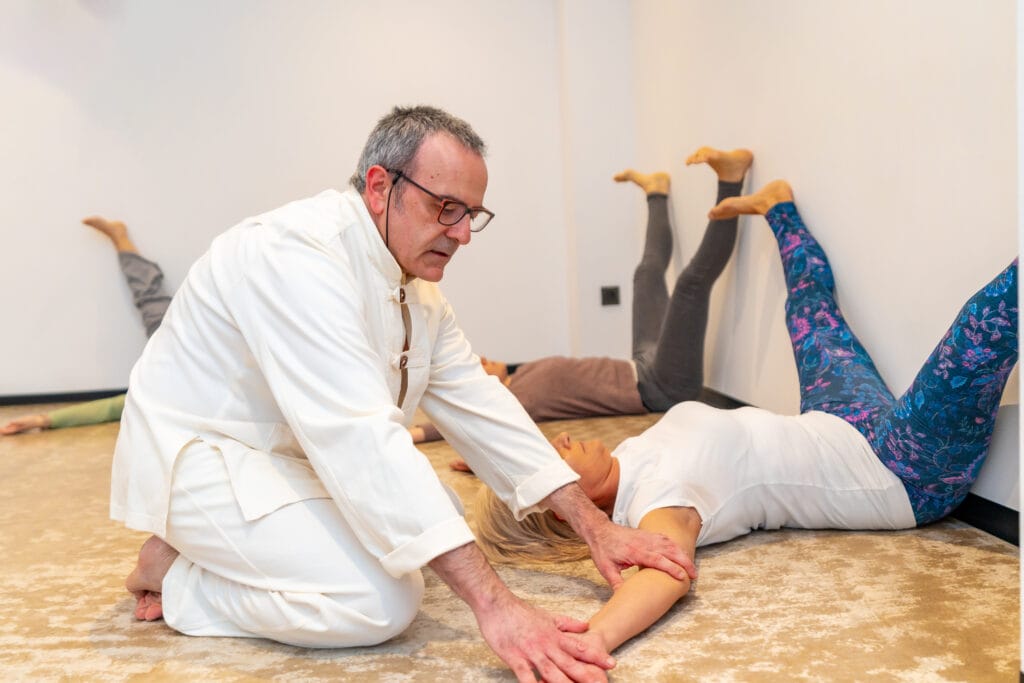
- Practice lying down at the beginning: The supine position facilitates relaxation of the abdomen.
- Don't force yourselfLet your breathing get deeper over time.
- Use mental counting: inhale on count 4, exhale on count 6.
- Be consistent, not perfect: better a few minutes each day than a long but sporadic practice.
Return to the center: breathing as an inner refuge
We live in a culture that pushes us toward constant productivity and relentless stimulation. In the midst of this whirlwind, diaphragmatic breathing is an invitation to return to our center. To remind us that true well-being isn't always found externally, but rather in our ability to inhabit the present moment.
Each deep inhalation is an entry into the body. Each long exhalation, an exit from mental noise. This breathing can not only alleviate stress, but also improve our relationship with the world: we react less, listen more, and decide more clearly.
When you don't know what to do, breathe. If you notice everything speeding up, breathe. When you need to return to yourself, breathe. Calm is, literally, within your reach.
In Quiroesencia We believe that the balance between body and mind is cultivated day by day. Our massage and yoga center is located in the heart of Granada, just a five-minute walk from the Cathedral.