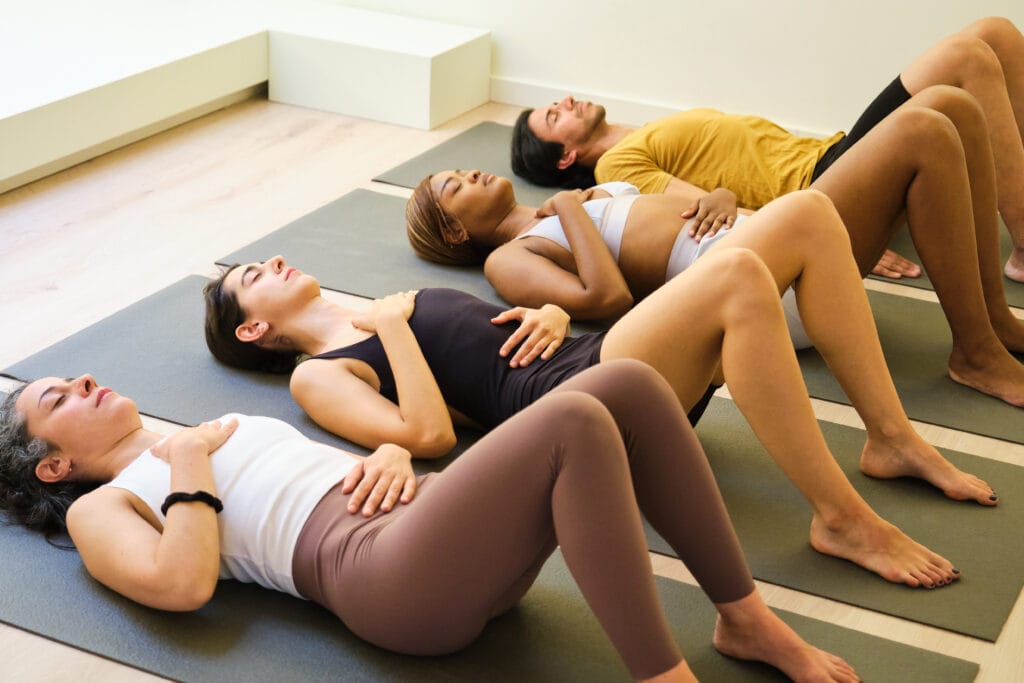
You sit down to meditate on the sofa, your phone in sight and the TV off but still present. After two minutes you're already wondering if you locked the door. The surroundings are meditating with you, even if it doesn't seem like it.
Does this sound familiar? We tend to think of meditation as something purely internal, but the space around you has a real impact on the quality of the experience. You don't need a dedicated room: with a few adjustments, any corner can support the practice.
How to choose the place
Look for three things: relative silence, security, and some privacy. Absolute silence isn't necessary—in fact, searching for that perfect moment that never arrives usually leads to more frustration than peace. Soft, constant sounds, like the wind or distant traffic, won't be a problem.
Safety matters: if you're afraid of being interrupted, it's hard to let go. Closing a door or silencing your phone makes all the difference. And having a corner you recognize as your own—even if it's just a chair by the window—means that, over time, your body associates that place with calm.
Light and temperature
Natural light is your best ally: if you can, meditate near a window, especially at dawn or dusk. If you use artificial light, opt for warm and soft light—a candle, a soft lamp—rather than cold or fluorescent light, which tends to keep the body more activated than is beneficial for this purpose.
The temperature should be balanced: neither so cold that it tenses your muscles nor so hot that it makes you sleepy. A light blanket over your shoulders solves most problems, and airing out the room well before starting helps more than you might think.
Order and physical comfort
A clutter-free space gives the feeling of "nothing to worry about here," which helps prevent the mind from getting caught up in the everyday. A deep clean isn't necessary every time; a simple tidying before sitting down is enough.
And physical comfort is essential, even though it might seem like a matter of the body rather than the mind: an uncomfortable body constantly interrupts the practice. You don't need to be flexible or sit in full lotus position. A meditation cushion, a bench, or simply a firm chair with your feet firmly planted are equally valid. The important thing is that your back can remain straight without effort or pain.
Sounds, aromas and textures
If you use music, make it instrumental and without sudden changes, so it accompanies without distracting. Tibetan singing bowls work well to mark the beginning or end of the session.
Aromas connect directly with emotions: natural incense, lavender, sandalwood. Avoid synthetic or very strong fragrances, which overstimulate instead of calming. And what touches the skin also matters: pleasant materials, loose clothing, a firm but soft cushion help the body stay put instead of constantly searching for a comfortable position.
A small ritual before we begin
Arriving at meditation without any transition makes it difficult to let go of the day's pace. A brief gesture before sitting down helps make the shift:
- Three to five slow, deep breaths.
- Some gentle stretches or the child's pose.
- Washing your hands or face, as a symbolic gesture of leaving the noise of the day outside.
- Light a candle to mark the beginning.
And to keep the space alive: air it out even if you're not using it that day, and close it with a moment of gratitude when you're finished. Over time, a corner that's been consistently cared for begins to feel as if it's waiting for you.
To continue reading
If you prefer to practice with someone, you have our Yoga classes in Granada. We are located at C/ San Jerónimo 48, Granada city centre.