You reach your thirties, or your forties, and one day you look in the mirror in a different light and think: "Something has changed, but I couldn't say what." It's not a specific wrinkle. It's more of a general feeling of tiredness in your face, even when you've slept well.
Does this sound familiar? That's when many people start looking for options, and one of the most common searches is comparing the Kobido to a facelift. Let's be honest from the start: They are not the same thing, and we're not going to pretend they are.
What we are not going to do in this article
We're not going to explain what a facelift does, what the risks are, or when it's a good idea to consider it. That's a medical decision made with a surgeon, with all the clinical information available, and it's not our place to offer an opinion. We're massage therapists, not healthcare professionals, and it would be irresponsible to imply otherwise.
What we can tell you, honestly, is What is Kobido, what does it offer, and who is it relevant for? — which is no small feat.
What is Kobido really?
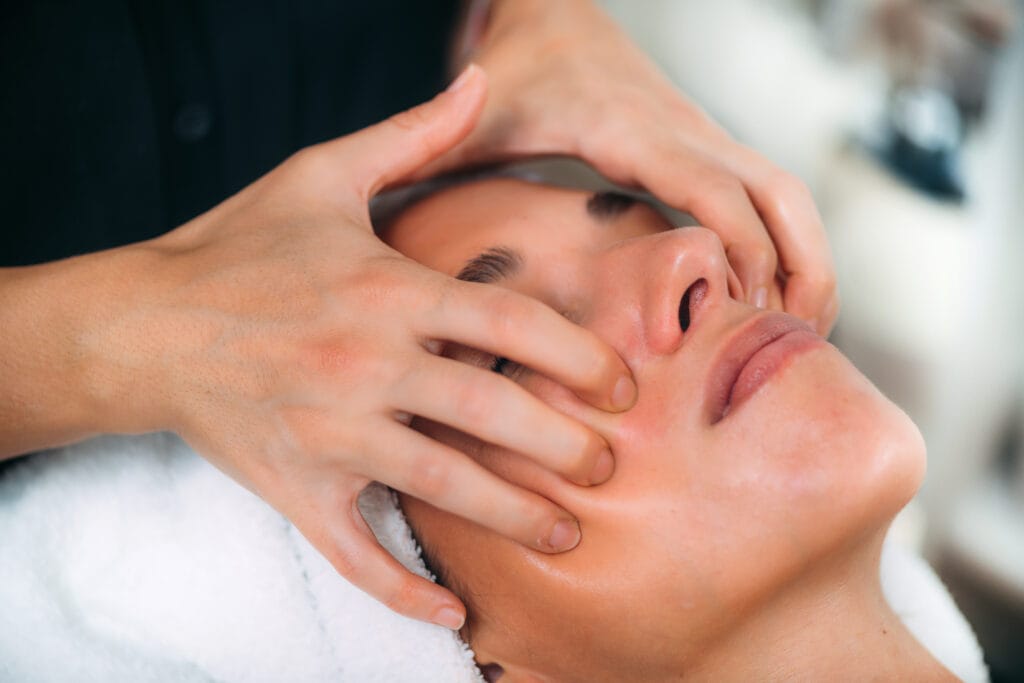
Kobido is a centuries-old Japanese facial massage that uses the hands to work on the muscles of the face, neck, and upper shoulders. It combines sweeping movements, sustained pressure, and a distinctive rhythmic percussion sequence.
There's no scalpel, no needles, no invasive procedure. It's manual work, period. That means It does not offer what an intervention offers.It doesn't reposition tissue or remove excess skin. And it also means there's no anesthesia, no downtime, and no risks associated with surgery, because it simply isn't one.
What is usually noticed with practice
None of this is a promise; it's just what people who come regularly tell us:
- Feeling of a less burdened face. Many people carry accumulated tension in their jaw and between their eyebrows without being aware of it. Working on those muscles produces noticeable results almost immediately.
- A brighter appearance upon exiting. It's a real but temporary effect, similar to what you notice after sleeping particularly well: it lasts between one and several days, it's not permanent.
- A moment of your own, every week or two. For many people, this ends up being the real reason for coming regularly: not the result in the mirror, but the time when nobody asks them for anything.
It's a maintenance and wellness program, not a permanent solution or comparable to a surgical intervention. Anyone seeking a permanent solution needs to speak with a healthcare professional, not us.
For whom does Kobido make sense?
If you're looking for a self-care ritual that shows results in the mirror, without committing to anything more than some time for yourself every now and then, this is for you. If you're looking for a permanent solution for something very specific, the conversation you need to have is with your doctor, not this website.
And these two things do not exclude or replace each other: they are simply answers to different questions.
To continue reading
- Facial massage in Granada — complete guide — the pillar of the cluster.
- Benefits of Kobido — what the technique contributes in detail.
- Kobido for jaw tension — when the load is concentrated there.
- How often should I have a Kobido? — recommended cadence.
If you'd like to try it, book your Kobido facial massage in Granada. And if you have any doubts about whether this is what you're looking for, write to us and we'll guide you without obligation.
Kobido is a wellness and facial massage practice. It is not an invasive medical or cosmetic procedure, does not replace any medical treatment, and should not be considered an alternative to a decision that should be made with a qualified medical professional.