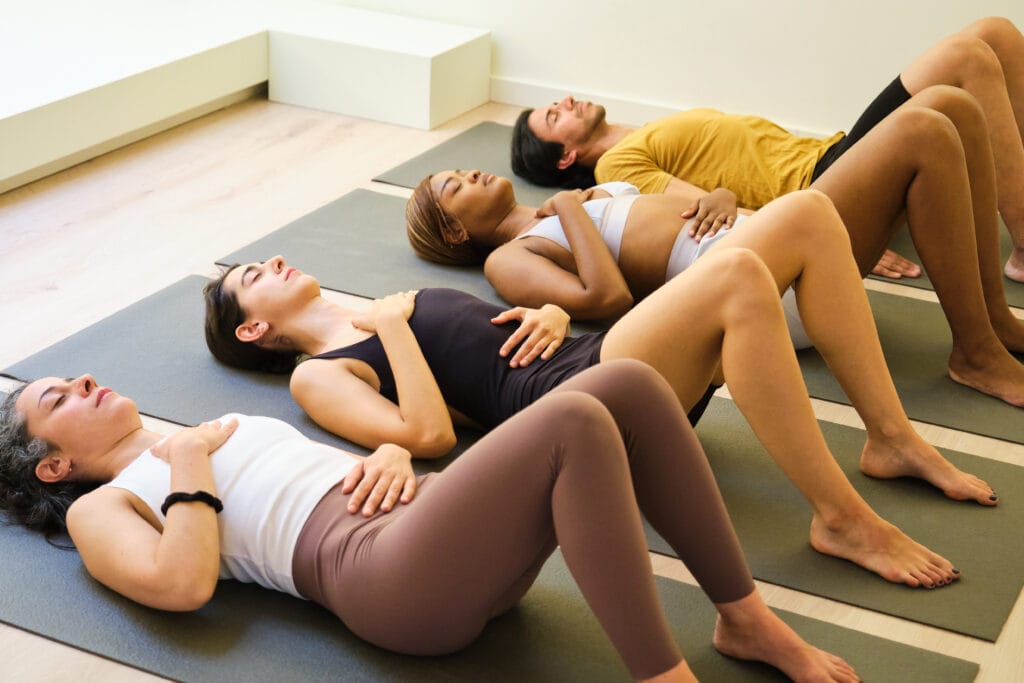
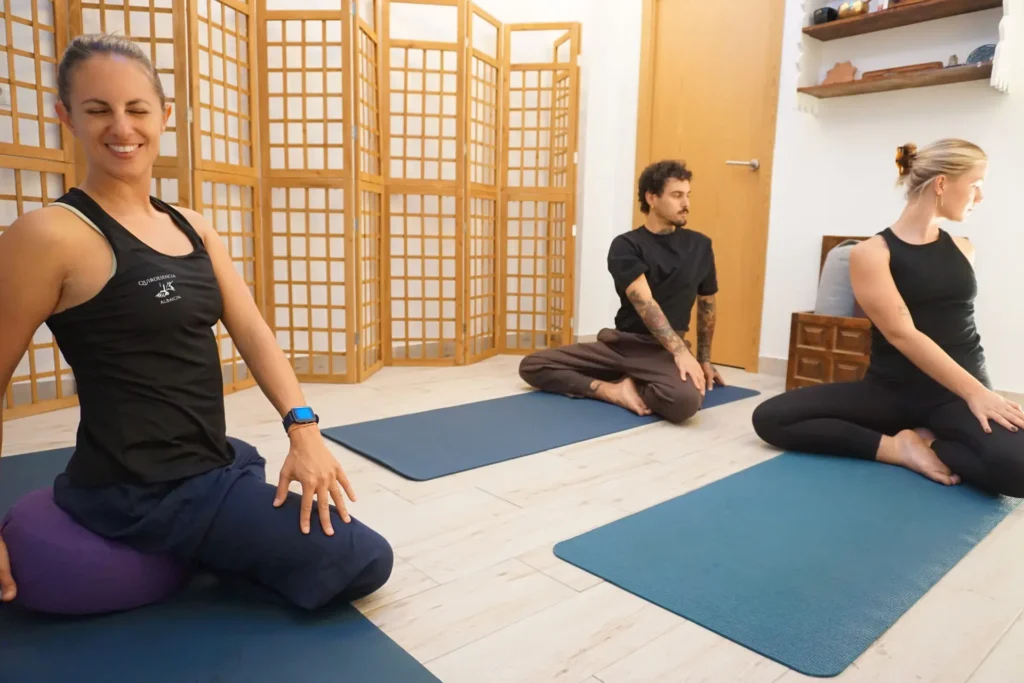
Two paths to the same goal
Yoga and massage seem like opposing practices: one active, the other receptive. But they share something fundamental: both work with the body, with breath, and with mindfulness, and both seek the same thing, even if they arrive at it by different paths.
Yoga creates inner space through movement and conscious breathing. Massage comes from the outside: the hands assist in releasing tension in tense areas and mobilize the tissues. One is received without doing anything; the other invites you to move and explore from within. That difference is precisely what makes them complement each other so well.
What do they have in common?
- Attention to the body. In yoga we observe how we feel from within; in massage, that awareness is awakened from without.
- Breathing. Guide and accompany in both, promoting a feeling of ease.
- The intention to take care of oneself. Beyond the physical, both seek a more complete well-being.
From my experience as a yoga teacher, alternating the two practices — or combining them in the same space — changes not only how you feel, but how you inhabit your own body.
What the combination brings
Mobility and posture. Often, a yoga pose feels awkward not due to a lack of flexibility, but because of accumulated tension in the shoulders, neck, or lower back. Massage softens this tension, allowing the asanas to flow more naturally. Yoga, in turn, reinforces this fluidity by activating the muscles that support the pose beyond the mat.
More calm and better rest. The touch of the massage and the conscious breathing of yoga accompany the same state: less tension, better quality of sleep.
Finer internal listening. Massage shows you from the outside where tension resides; yoga teaches you from within how to hold and release it. Together, they help you recognize your body's signals before they become discomfort.
Preventive care. If you practice yoga regularly, massage can help support overused areas—such as the hamstrings, psoas, and trapezius muscles—while yoga itself strengthens those same areas. For any diagnosed injury, coordinate your care with your qualified healthcare professional.
How to combine them in practice
Extensive planning isn't necessary. The key is to listen to what your body is asking for and be consistent, even if it's just a little.
Alternating during the week: Yoga two or three times a week for maintenance, and massage every two to four weeks for a deeper tune-up.
On the same day, with order: If you receive a relaxing or deep tissue massage, it's best to wait a few hours before practicing yoga, and choose a gentle, restorative practice. If you do an intense practice—vinyasa, ashtanga—a massage afterward complements the muscle recovery. At my retreats, I often combine yoga in the morning with massages in the afternoon: the body is more receptive, and the session is more beneficial.
Depending on the moment: During periods of greater introspection, relaxing massage and restorative yoga are recommended. With more available energy, more active practices are suitable. During menstruation or times of great fatigue, massage is a gentle support, and yoga focuses on breathing and rest.
And if you have little time, you don't need a whole hour: fifteen minutes of yoga at home in the morning, or scheduling a massage once a month as a date with yourself, already adds up.
To continue reading
- Comprehensive wellness and yoga program
- Yoga and physical exercise: how to combine them
- Relaxing massage: what it is and types
If you want to explore this combination, you have our yoga classes and our relaxing massage in Granada city centre, and you can also combine them within the comprehensive wellness program.