What is jaw tension and why does it occur?
You wake up with a stiff jaw, or a feeling of tension throughout your face that you can't quite place. It's likely you spent the night clenching or grinding your teeth without realizing it.
Does this sound familiar? Although often downplayed, this accumulated tension affects both physical well-being and mood. If the discomfort persists, it's advisable to consult your dentist or doctor.
This habit can be associated with tooth wear, persistent jaw discomfort, disrupted sleep, and increased tension due to physical discomfort. More and more people are describing it, and it's no coincidence. We live under constant pressure: screens on 24/7, work demands, mental overload. Jaw tension is often a physical manifestation of accumulated stress.
Why does it accumulate there specifically?
The jaw is one of the areas where tension accumulates most without us realizing it, along with the neck and shoulders. When the day has been busy and there hasn't been a moment to release that tension, the body carries that burden to bed, and that's where clenching, grinding, or even nighttime spasms appear.
How can yoga help with the feeling of jaw tension?
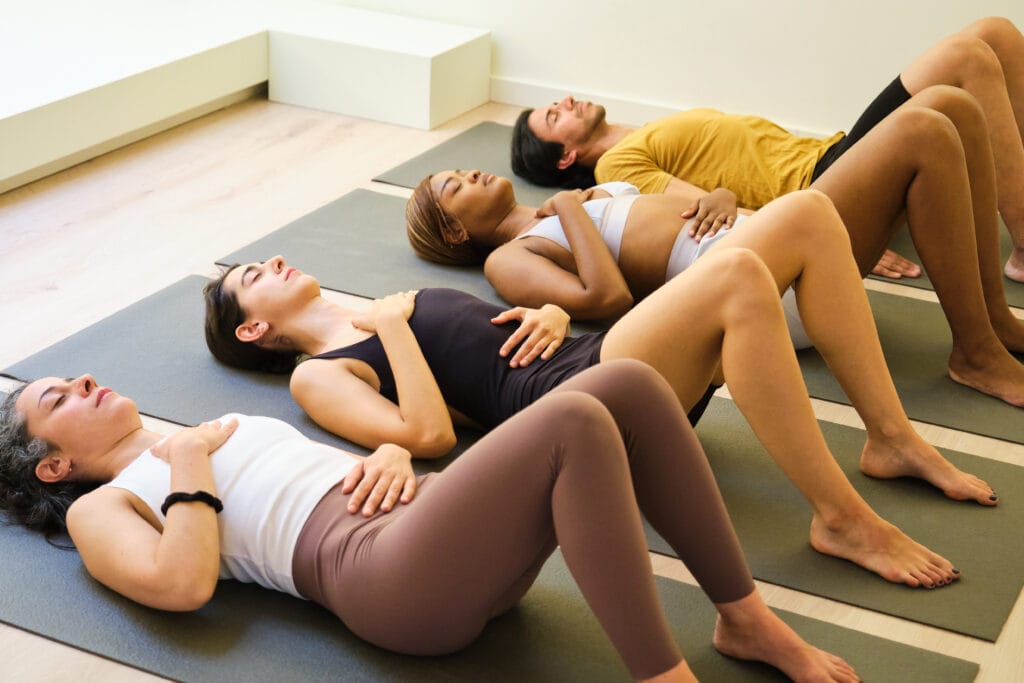
Yoga doesn't offer instant solutions, but it does offer profound paths. Through restorative postures, deep breathing, and meditation, many people describe a shift from a state of constant alertness to a state of inner calm. This change in bodily sensation allows the facial and neck muscles to relax naturally.
In our Yoga classes in Granada We specifically work on cervical mobility techniques, conscious breathing, and restorative postures that help relieve the feeling of accumulated tension in the jaw, neck, and shoulders.
Recommended yoga practices to relax the jaw
Cervical mobility: The jaw is connected to the neck, trapezius muscles, and shoulder blade area. Gentle cervical stretches, head circles, and postures that release this chain have an effect on the sensation of facial tension.
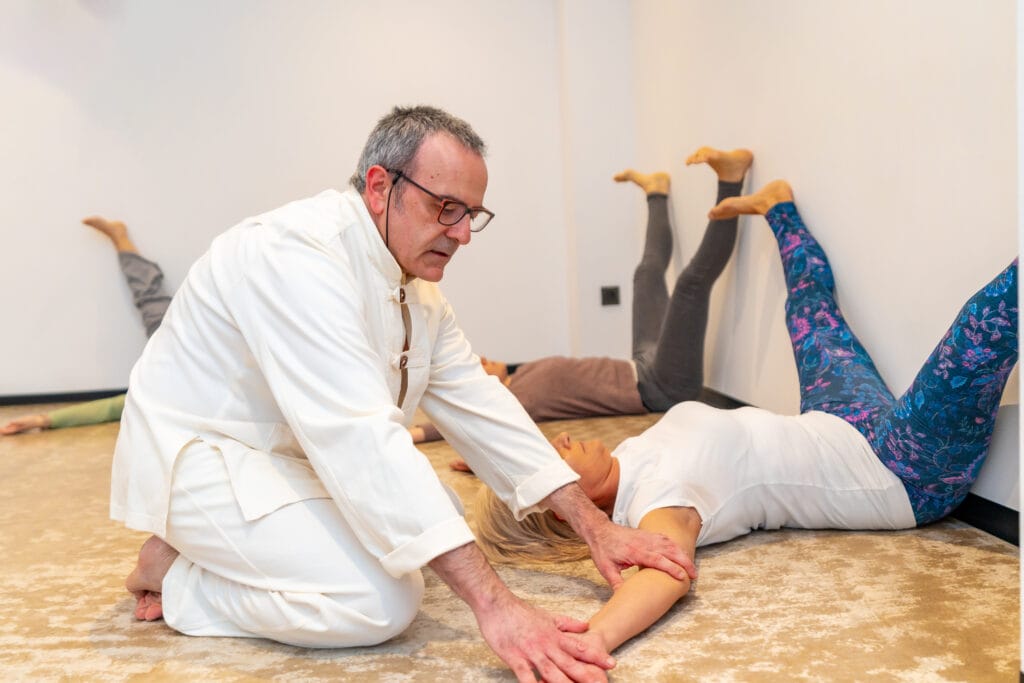
Restorative postures: Balasana (child's pose), Savasana with neck support, and Viparita Karani (legs up the wall). Even 10 minutes a day in a restorative pose with mindful breathing can help relieve the feeling of facial and neck stiffness.
Pranayama: Square breathing (inhale 4, hold 4, exhale 4, hold 4) and Nadi Shodhana (alternate nostril breathing) help to calm the mind and promote relaxation in areas that are usually tense, such as the jaw.
Complement your yoga practice with Kobido facial massage
For more direct work on the jaw muscles, the Kobido facial massage in Granada It's a highly valued complement to yoga. This Japanese technique works deeply on the entire jaw area through sustained pressure and rhythmic tapping, providing a feeling of relaxation. Many people combine both disciplines with remarkable results in their sense of facial well-being.
Simple tips to loosen your jaw during the day
- Place a post-it note on your computer: "Are you pressing too hard?"«
- Practice releasing your tongue from the roof of your mouth every hour.
- Avoid chewing gum or holding objects in your mouth.
- Take active breaks: neck circles, shoulders back, deep breathing.
In Quiroesencia We believe that the balance between body and mind is cultivated day by day. Our massage, yoga, and manual wellness center is located in the heart of Granada, just a five-minute walk from the Cathedral.
- WhatsApp: +34 621 217 595
- 48 San Jerónimo Street, Granada