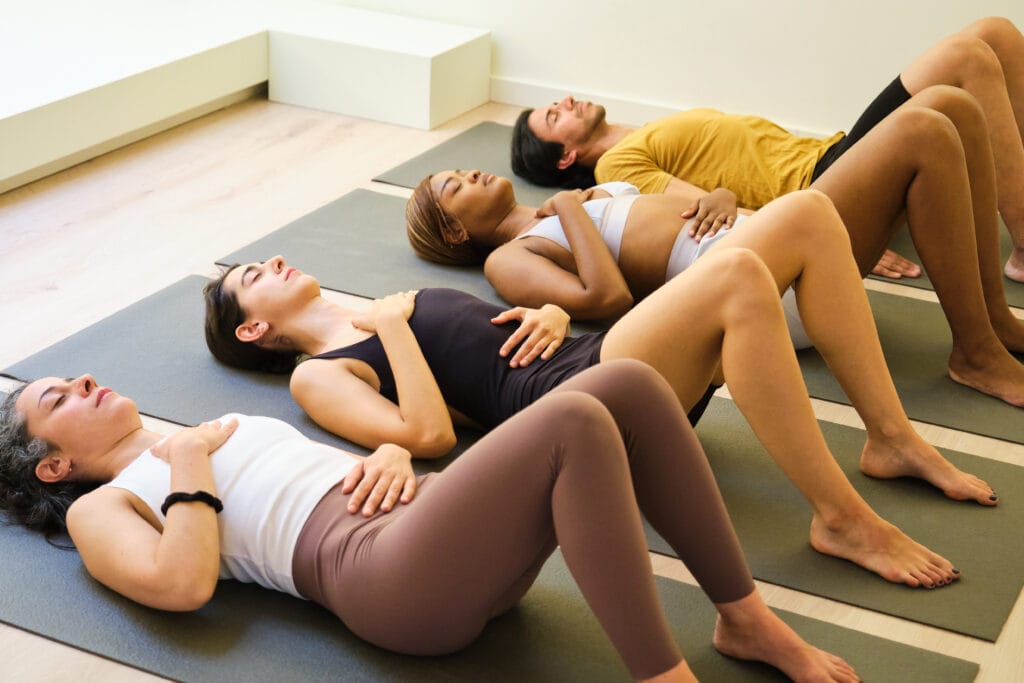
Place one hand on your chest and the other on your stomach, and breathe normally, without forcing anything. Which one moves more? If it's the one on top, you're not alone: it's how almost everyone who spends the day sitting, hunched over a screen, breathes.
Does that sound familiar? The diaphragm is the muscle that should bear the weight of that breathing, and for many people it hasn't moved freely for years.
What is the diaphragm?
It's a dome-shaped muscle, thin but very powerful, that separates the thoracic cavity from the abdominal cavity. We don't see it, we don't think about it, and yet it works thousands of times a day without us paying it any attention. It's precisely this lack of attention that causes it to lose its range of motion for years without anyone noticing.
Why does it get tense?
Sustained stress, a hunched posture, and shallow breathing are the most common causes. When the diaphragm doesn't move freely, breathing becomes trapped in the upper chest, and this type of breathing keeps the body in a state of heightened alertness. It's a self-reinforcing cycle: the less the diaphragm moves, the shallower the breath becomes, and vice versa.
Positions to release it
Backbends—like Bhujangasana (Cobra Pose) or Ustrasana (Camel Pose)—open up the chest cavity and allow the diaphragm room to expand. And there's an even simpler exercise you can do today: lying in Savasana (Mountain Pose), with one hand on your abdomen, breathe, focusing on raising that hand, not your chest. Ten breaths like this are enough to start noticing the difference.
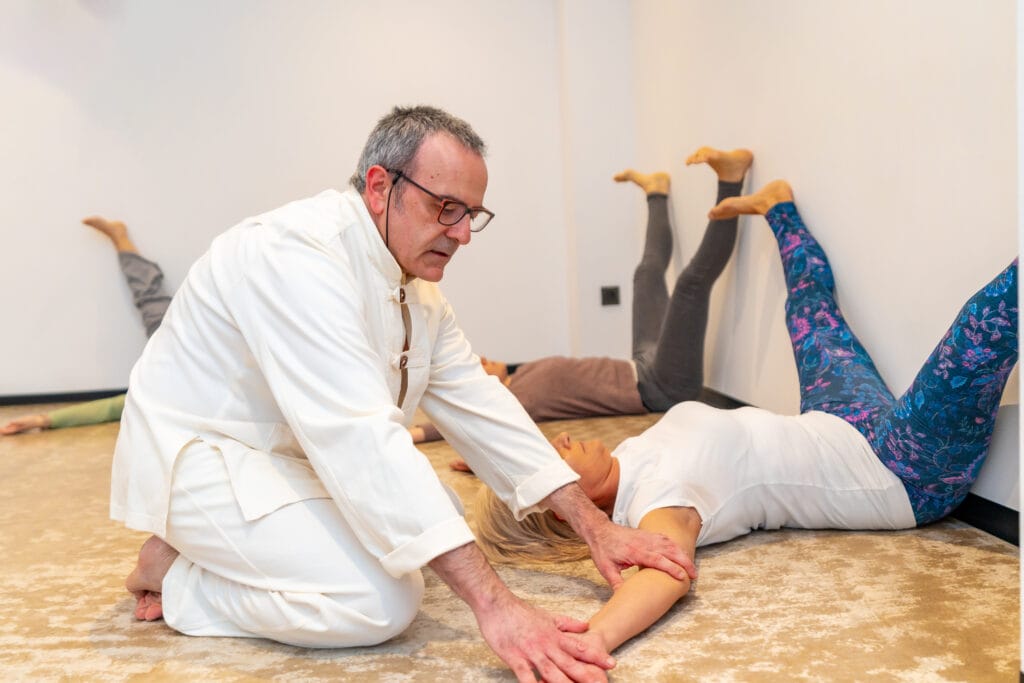
In our Yoga classes in Granada We integrate these postures with guided breathing, precisely because one without the other is much less effective.